

Scenarium
AI-Powered Clinical Simulation for Enhanced EMS & Medical First Responder Training

briefing
In Emergency Medical Services (EMS) and Medical First Responder (MFR) training, practical drills are essential for building field readiness. However, instructors at St. John Ambulance faced significant operational challenges in scenario generation and evaluator consistency. Creating clinical-grade, realistic scenarios manually required substantial time and effort. Additionally, reliance on repetitive scenario templates caused instructor bias and predictable drill pathways, leading responders to memorize steps rather than exercise dynamic clinical decision-making. Assessing practical drills across different instructors also resulted in variance in performance scoring and lack of standardized feedback.
Solution
I designed and developed Scenarium, a specialized, mobile-optimized web application powered by the Google Gemini API (built via Google AI Studio). Scenarium allows instructors to instantly generate complex, randomized clinical scenarios tailored to specific responder skill levels. The platform features built-in interactive evaluator rubrics, standardized protocol checklists, dynamic vital sign trajectories, and one-tap PDF performance exporting. By replacing manual paper scenario cards with an intuitive digital interface, Scenarium standardizes performance evaluation and provides unlimited scenario diversity for routine drills, certification exams, and field debriefings.
the
approach
I began by analyzing the workflow of MFR instructors and responders during live practical simulations to identify key friction points in preparation, execution, and evaluation.
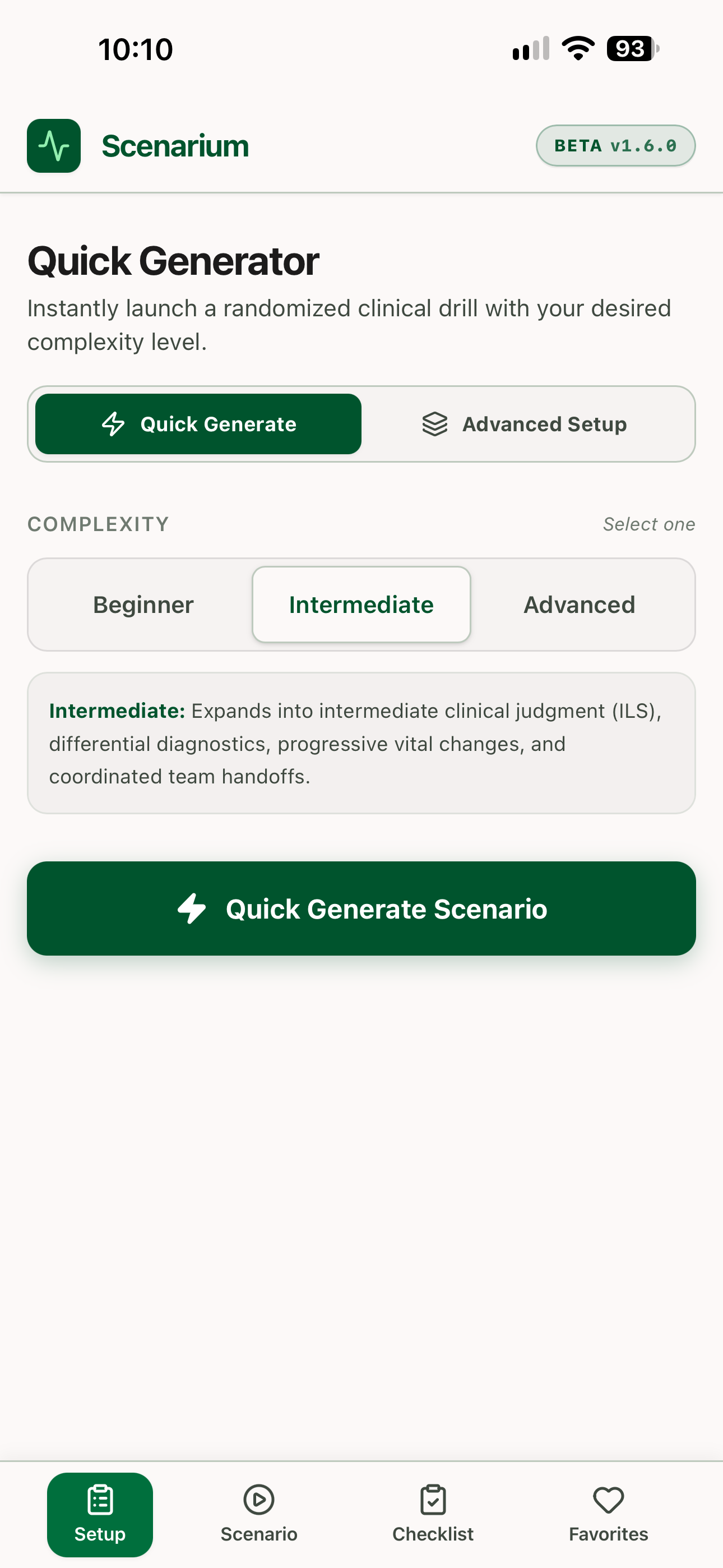
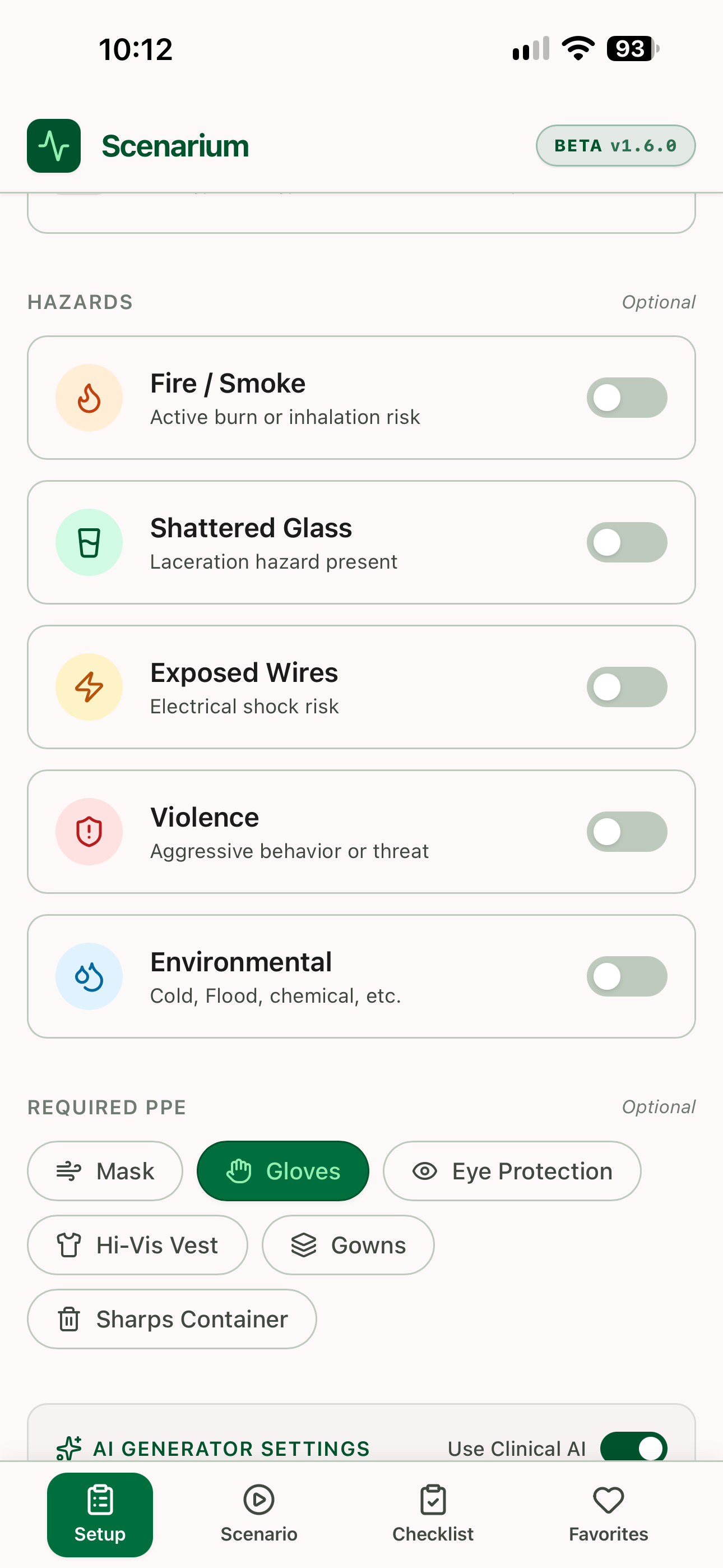
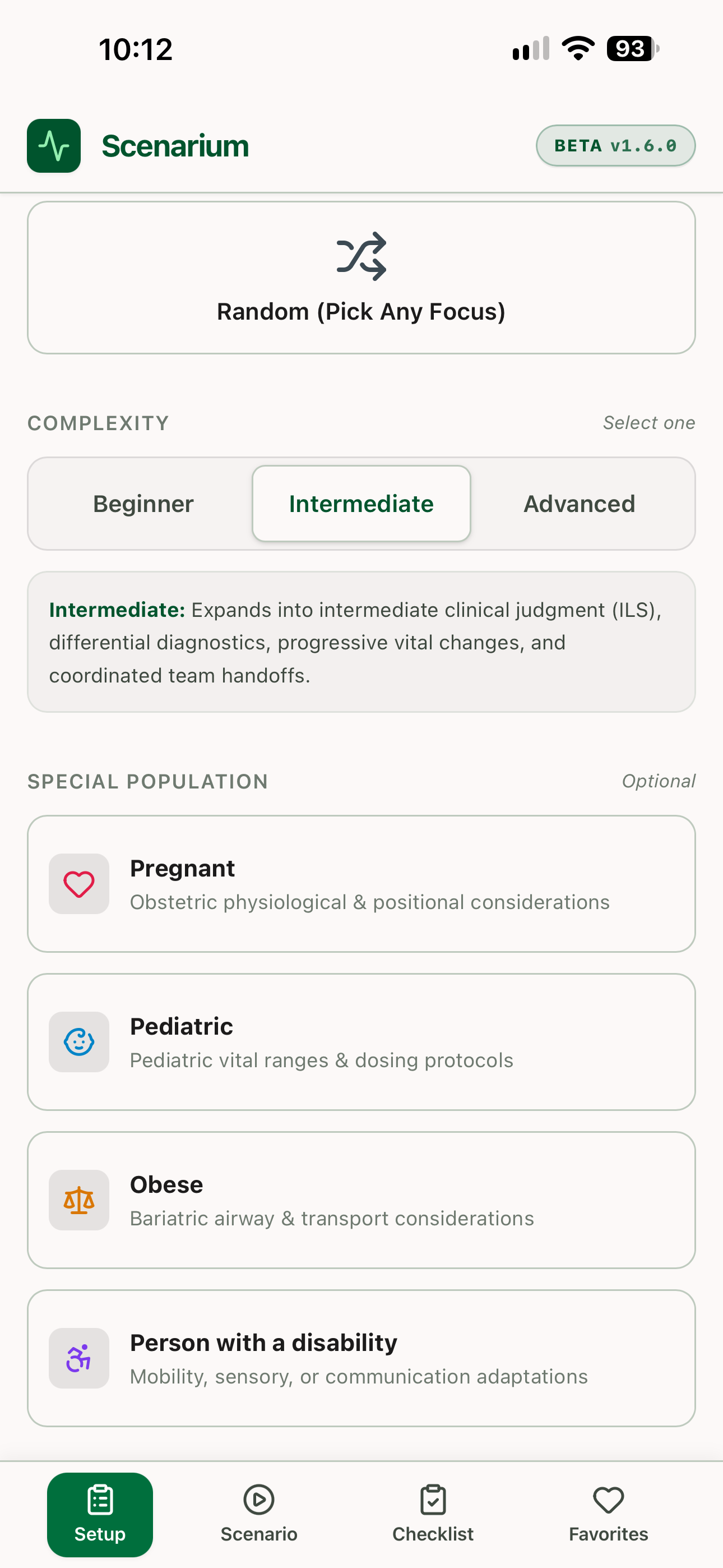
To solve scenario predictability and manual prep time, I designed a Drill Setup Configuration engine:
- Quick & Advanced Generators: Configures target complexity levels (Beginner, Intermediate, Advanced) and randomizes focus areas instantly.
- Special Population Modifiers: Introduces patient variables such as Pregnant, Pediatric, Obese, or Disabled to practice tailored care protocols.
- Hazards & PPE Configurator: Applies real-world scene risks (Fire/Smoke, Shattered Glass, Exposed Wires, Violence) and specifies mandatory personal protective equipment.
For live scenario execution, I created an Active Drill Execution interface optimized for mobile browser deployment (iOS/Safari PWA):
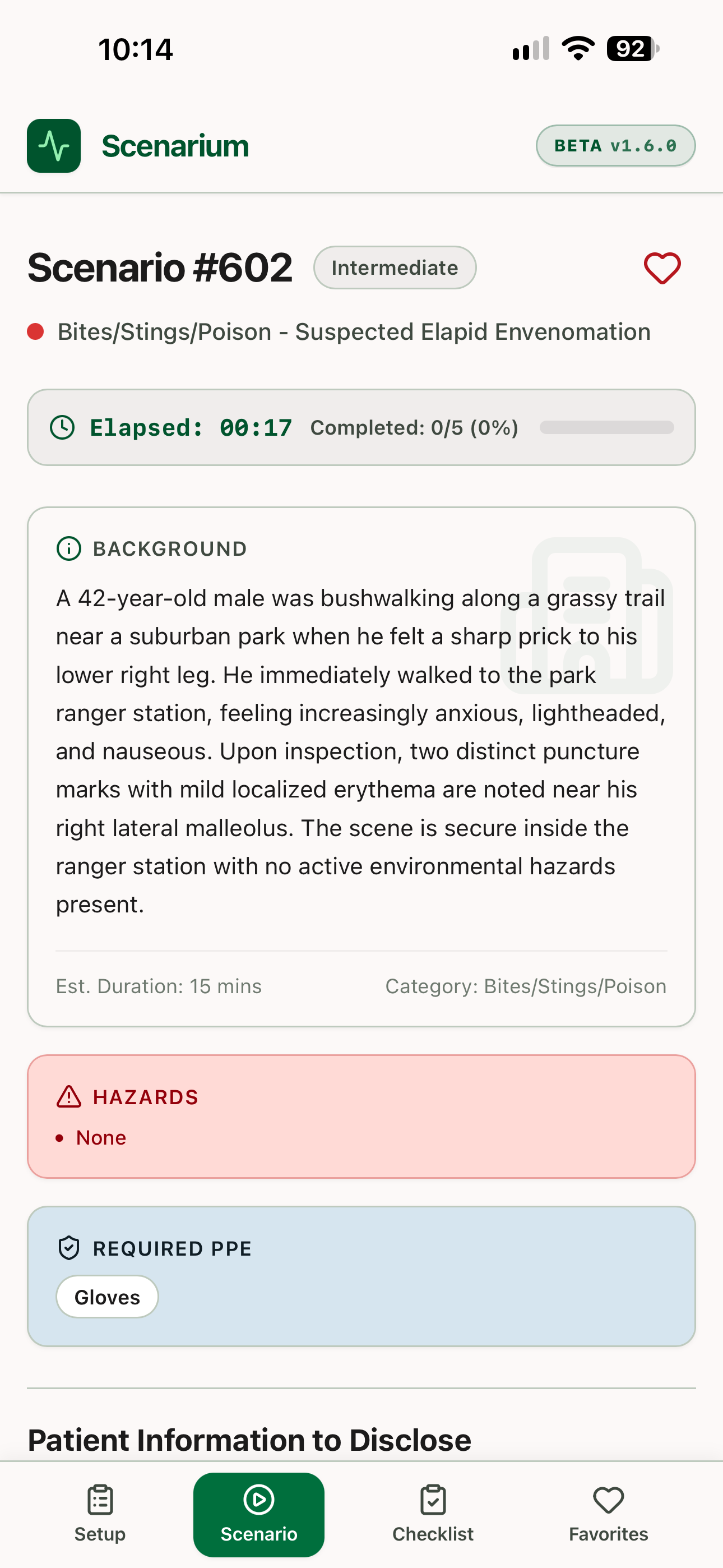
- Clinical Background & Real-Time Indicators: Displays elapsed timers, scenario narrative, scene hazard alerts, required PPE badges, and direct patient quotes for communication practice.
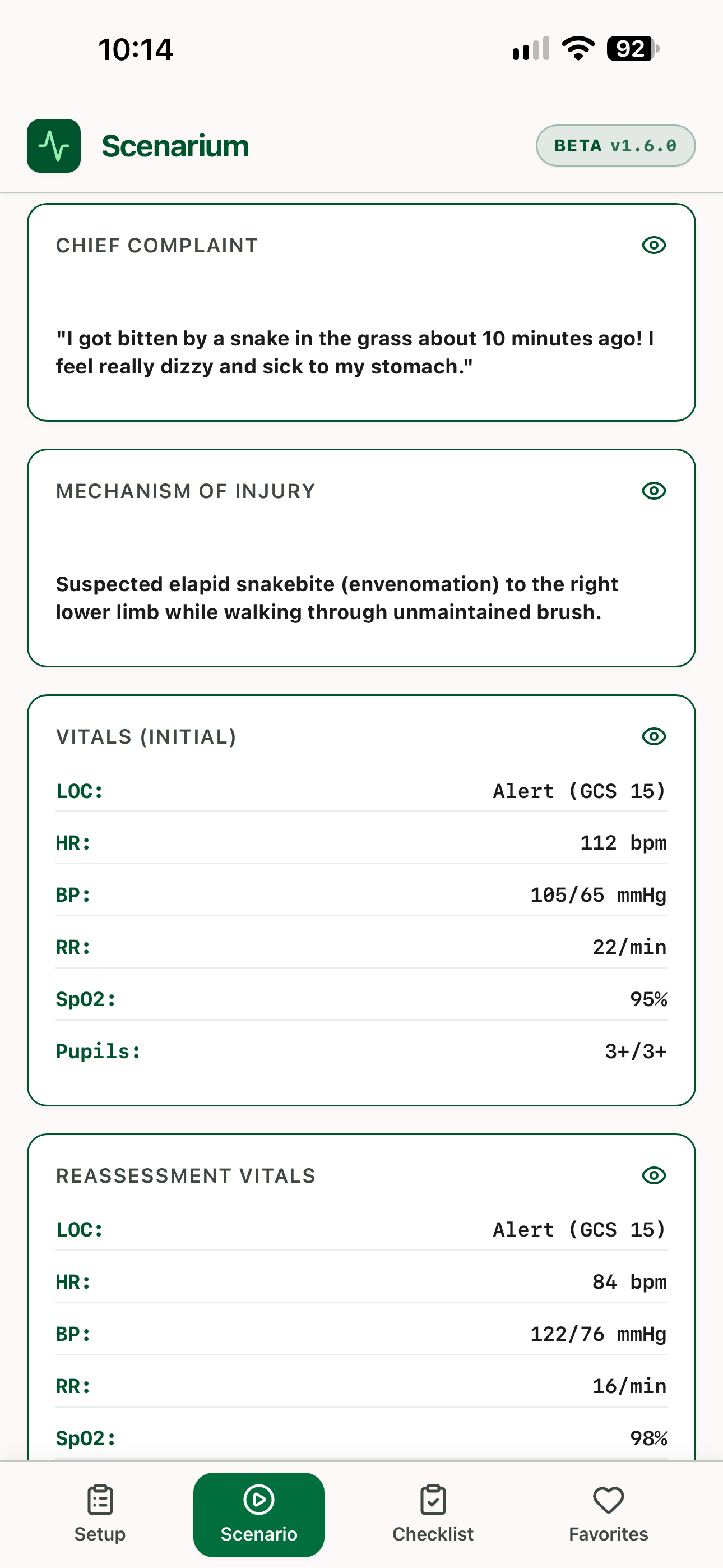
- Dynamic Vitals Trajectory: Tracks initial vs. reassessment vitals (GCS, HR, BP, RR, SpO2, Pupils) to train responders in continuous patient monitoring.
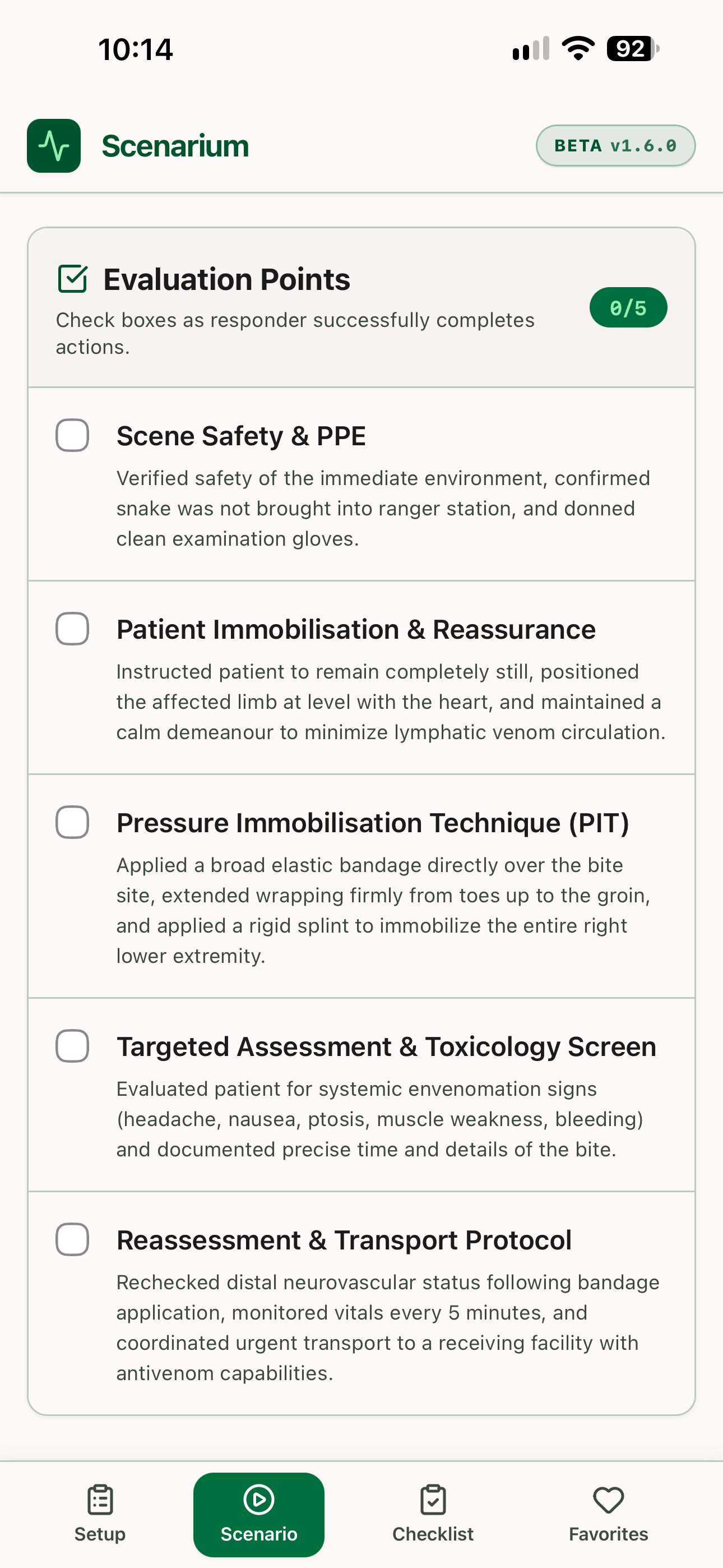
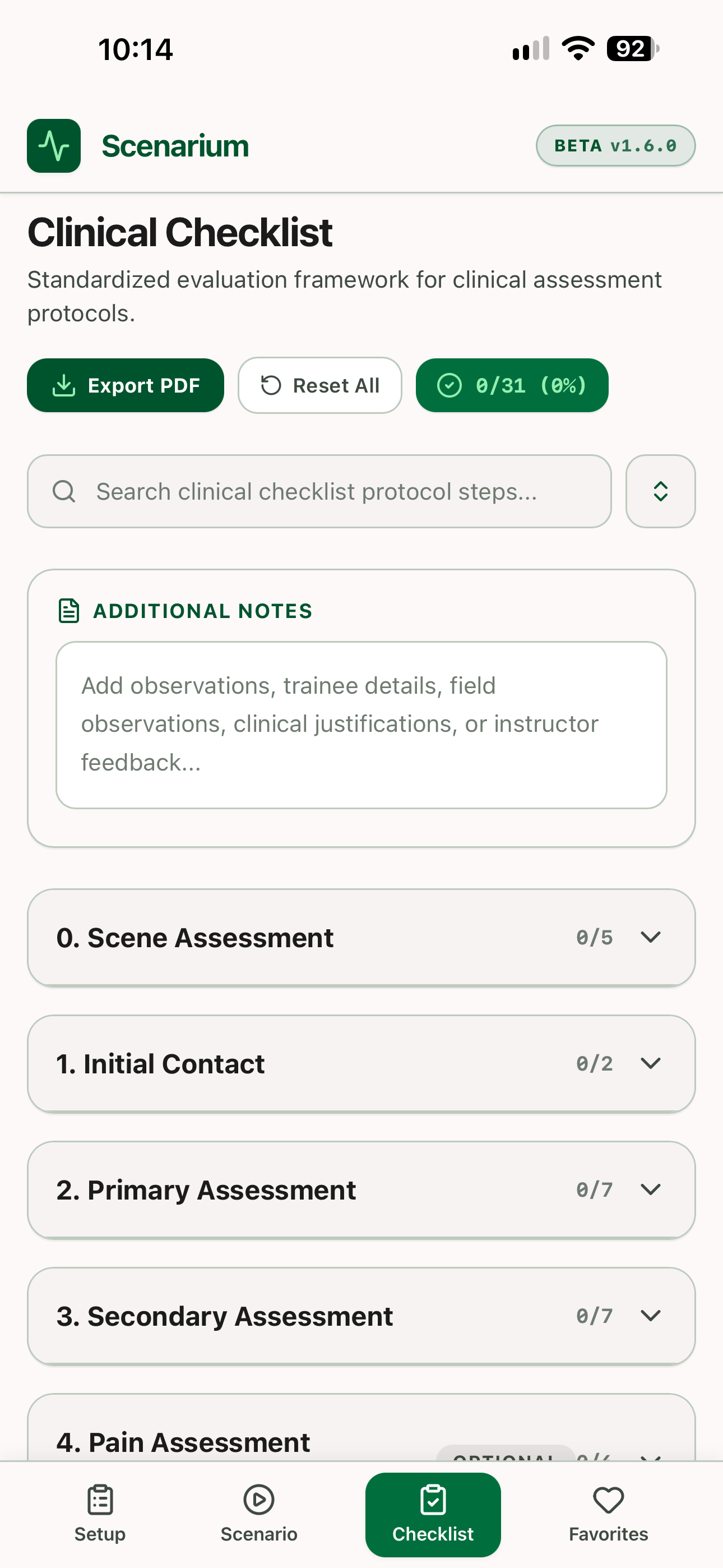
- Real-Time Interactive Rubric & Protocol Checklists: Standardizes evaluation across Scene Assessment, Initial Contact, Primary/Secondary Assessment, and Pain Assessment protocols, allowing evaluators to score critical actions live.
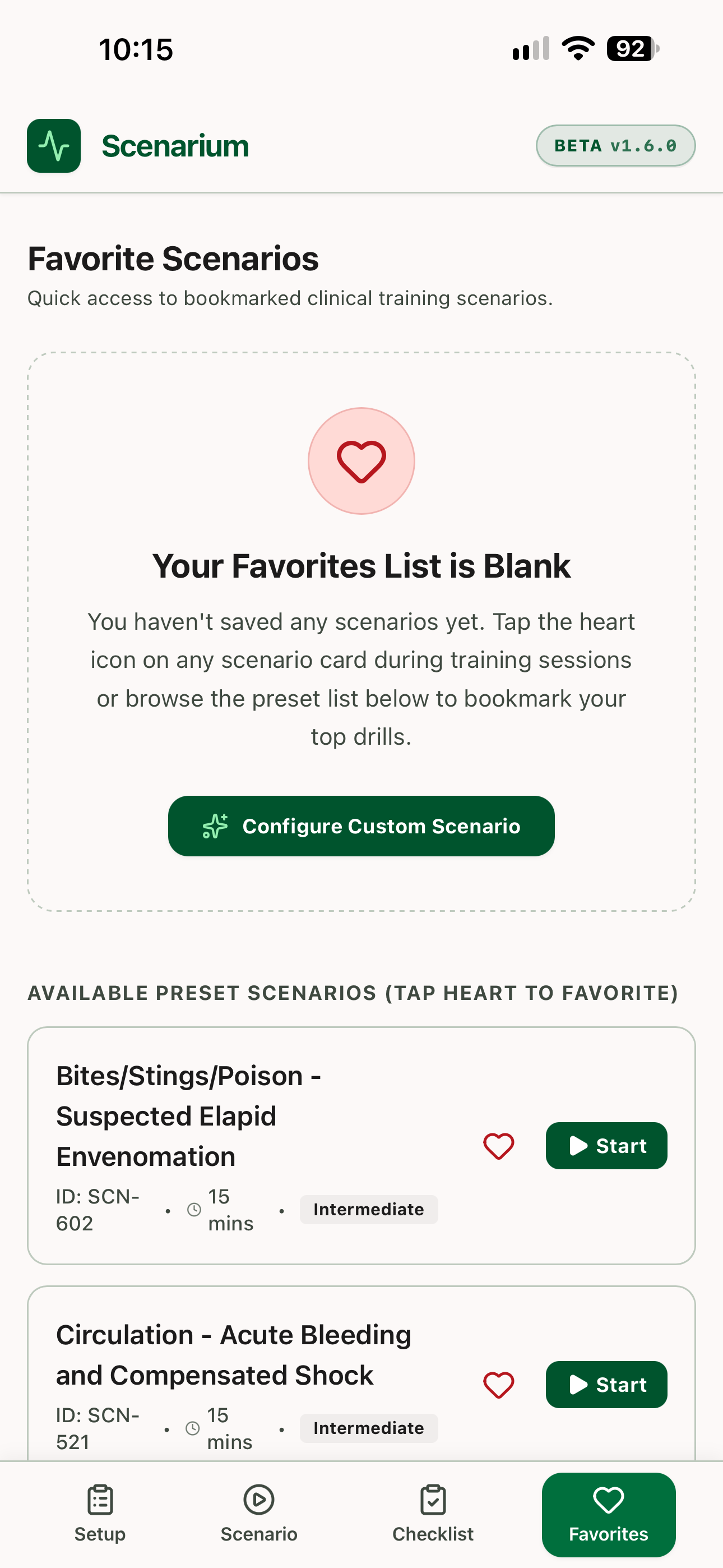
To complete the end-to-end evaluation cycle, I implemented a One-Tap PDF Performance Export system that packages documented instructor notes, trainee observations, and performance scores for official training records and post-event field debriefings. A One-Tap Bookmarking System was also included to allow instructors to save top drills into a personalized library for instant reuse during examinations.
The
Outcome
Scenarium transformed the clinical simulation workflow for St. John Ambulance instructors and responders in Ontario:
- Faster Prep Efficiency: Instructors saved dozens of hours previously spent writing, printing, formatting, and managing paper scenario cards.
- Standardized Objective Evaluations: Interactive clinical checklists and rubrics established objective, unbiased scoring across different evaluators and training units.
- Unlimited Scenario Diversity: Multi-variable AI generation eliminated repetitive patient cases, sharpening responders' critical thinking and adaptive care under pressure.
- Field-Ready Mobile Deployment: Fully responsive design provided smooth operation on smartphones during fast-paced practical drills.
The app supported routine weekly training sessions, formal MFR certification tests, and structured post-simulation field debriefings backed by concrete performance data.
Lessons Learned
Developing an AI-driven tool for high-stakes medical training emphasized the importance of balancing algorithmic automation with strict clinical protocols. I learned that AI prompt design in medical contexts requires clear boundaries to ensure generated vitals, symptoms, and mechanisms of injury align with realistic physiological responses and established care guidelines. Furthermore, designing for fast-paced, live environments demonstrated that user interfaces must minimize cognitive load for evaluators—prioritizing large touch targets, clear visual hierarchy, and instant data entry so instructors can keep their eyes on the responders rather than the screen.